Best Conditioning Methods for Boxing
Boxing isn’t just about throwing punches—it’s about sustaining speed, power, and composure over multiple rounds. That demands a very specific kind of conditioning: a blend of endurance, explosiveness, coordination, and mental resilience. The best boxing conditioning exercises reflect the realities of the ring—short bursts of high intensity, constant movement, and minimal recovery.
Here’s a focused breakdown of the most effective conditioning methods for boxing and why they matter.
Roadwork (Running with Purpose)
Traditional roadwork remains a cornerstone of boxing conditioning, but it’s often misunderstood. Long, slow-distance runs build your aerobic base, helping you recover between rounds and maintain output over time. However, boxing is not a marathon—it’s intermittent.
That’s why interval running is even more valuable. Sprint intervals (e.g., 30 seconds sprint, 30–60 seconds jog) mimic the pace of a fight: explosive exchanges followed by brief resets. Hill sprints are especially effective for developing leg power and mental toughness.
Key takeaway: Combine steady-state runs (2–5 miles) with sprint intervals for a complete conditioning base.
Jump Rope
If there’s one exercise that directly translates to boxing performance, it’s jump rope. It sharpens footwork, timing, rhythm, and cardiovascular endurance—all at once.
Advanced variations (double unders, criss-crosses, high knees) push coordination and intensity further, while longer rounds (3 minutes or more) simulate fight pacing.
Why it works: It conditions the calves and ankles for constant movement while training you to stay light and reactive.
Heavy Bag Work
The heavy bag isn’t just for technique—it’s a brutal conditioning tool when used correctly. High-intensity bag rounds force you to punch under fatigue, maintain guard discipline, and manage breathing.
Structured rounds can include:
- Punch-out drills (nonstop punches for 15–30 seconds)
- Power intervals (alternating light and heavy shots)
- Movement-focused rounds (circle, pivot, and strike)
Key takeaway: Treat bag work like a fight—don’t just hit hard, sustain output and movement.
Shadowboxing (Done Properly)
Shadowboxing is often underestimated because it lacks resistance, but when done with intent, it’s one of the best conditioning tools available.
Fast-paced shadowboxing rounds build muscular endurance, reinforce technique under fatigue, and improve mental focus. Adding light weights (1–2 lbs) or resistance bands can increase intensity—but only if form stays clean.
Why it matters: It’s low-impact but high-return, allowing you to accumulate volume without excessive wear on the body.

Bodyweight Circuits
Boxers rely heavily on relative strength and muscular endurance rather than maximal lifting power. Bodyweight circuits are ideal for this.
A typical boxing circuit might include:
- Push-ups (various styles)
- Pull-ups
- Squats or jump squats
- Burpees
- Planks or core rotations
These are often performed in continuous circuits or timed rounds (e.g., 3 minutes on, 1 minute rest), mimicking fight structure.
Key takeaway: Focus on endurance and movement quality, not just reps.
Medicine Ball Training
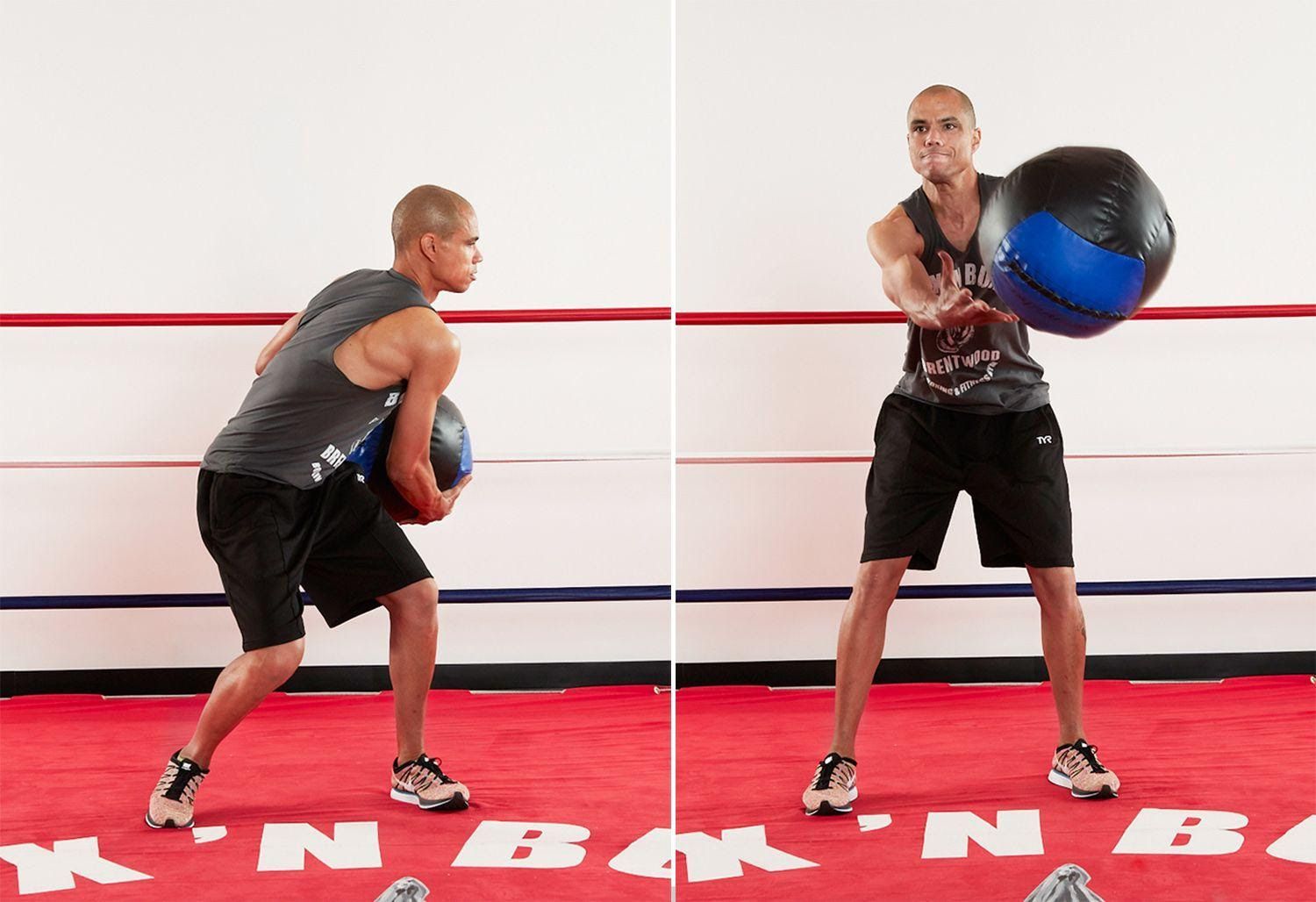
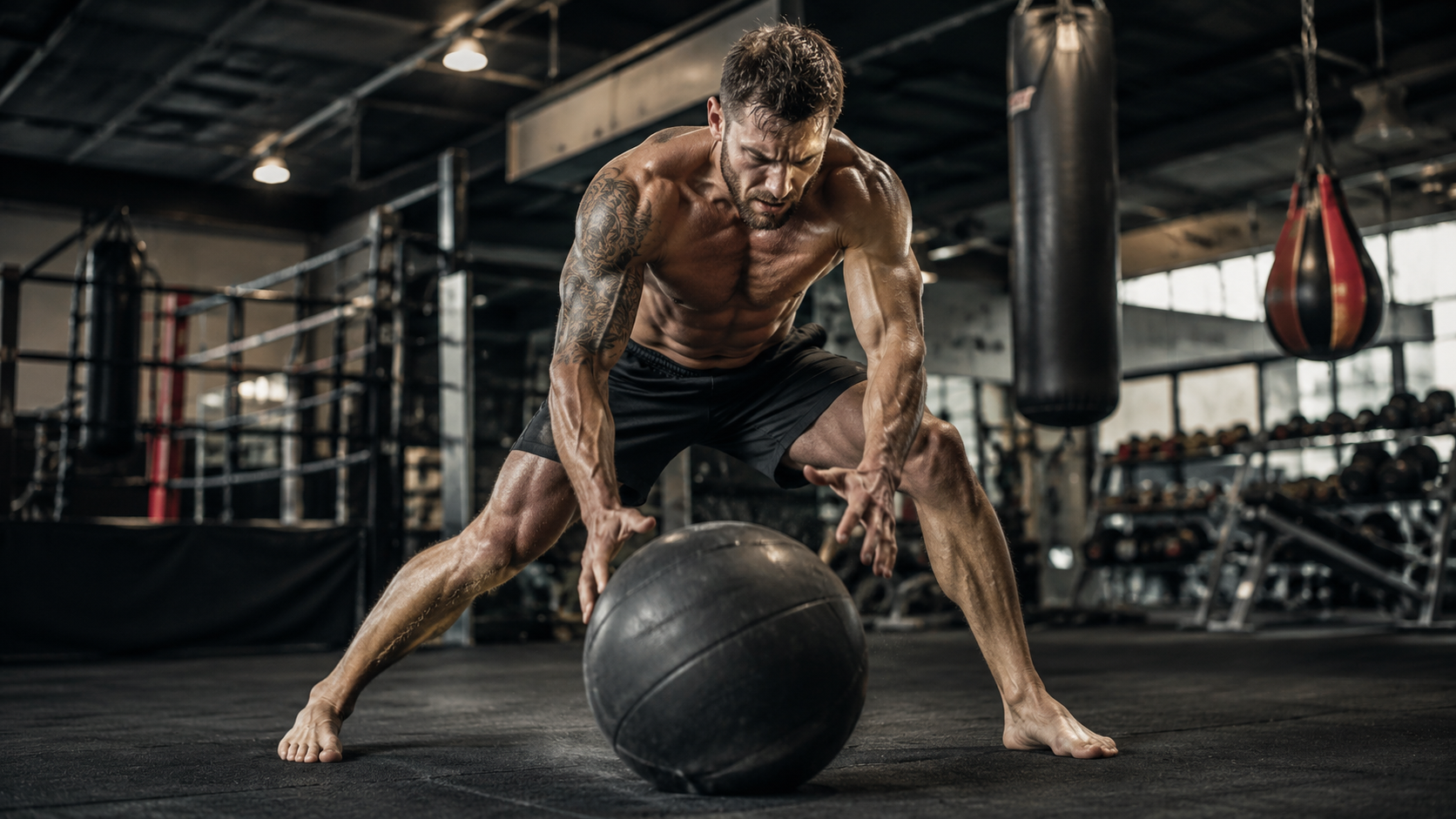
Medicine ball exercises bridge the gap between strength and explosiveness. Rotational throws, slams, and chest passes directly improve punching power by training the core and hips.
Effective drills include:
- Rotational wall throws
- Overhead slams
- Scoop tosses
Why it works: Punching power originates from the ground up—medicine ball work reinforces that kinetic chain.
Sparring
No conditioning exercise replicates boxing better than sparring. It combines physical exertion, reaction time, stress management, and tactical thinking.
Even light sparring exposes weaknesses in conditioning—especially when dealing with pressure, pacing, and recovery between exchanges.
Important note: Sparring should be controlled and purposeful. It’s not just about intensity but learning to manage energy efficiently.
High-Intensity Interval Training (HIIT)
HIIT circuits are ideal for replicating the demands of a fight. Short bursts of maximum effort followed by limited rest train both anaerobic and aerobic systems.
Example:
- 20 seconds max effort (e.g., burpees, sprints, punch-outs)
- 10–20 seconds rest
- Repeat for multiple rounds
Why it’s effective: Boxing is chaotic and explosive—HIIT prepares you for that unpredictability.
Core Conditioning
A strong core is essential for both power generation and durability. Beyond basic sit-ups, boxers need rotational and anti-rotational strength.
Best exercises include:
- Russian twists
- Hanging leg raises
- Plank variations
- Cable or band rotations
Key takeaway: Train your core to stabilize and rotate—just like in punching.
Final Thoughts
The best boxing conditioning program isn’t built on a single exercise—it’s a system. You need endurance to last, explosiveness to strike, and resilience to keep going under pressure.
A well-rounded routine will include:
- Running (steady + intervals)
- Skill-based conditioning (rope, shadowboxing, bag work)
- Strength endurance (circuits, core work)
- Explosiveness (medicine ball, sprints)
- Realistic application (sparring)
Cut corners in conditioning, and it shows immediately in the ring. Build it properly, and everything else—technique, power, confidence—has a foundation to stand on.