5 Best Rotational Exercises for Boxing Punching Power

August 31, 2026

Punching power is not produced by the arms alone. A powerful punch begins from the ground and travels through the feet, legs, hips, trunk, shoulders, and finally the fist. This makes rotational strength and explosiveness essential qualities for a boxer.


Effective boxing strength training requires more than simply lifting heavier weights. Boxers need the ability to generate force quickly, transfer energy efficiently through the kinetic chain, and maintain control during explosive movements.


Research on boxing performance supports the use of multiplanar rotational strength and power exercises, including medicine-ball throws, landmine variations, and unilateral resistance movements, to help improve explosive punch performance.


Here are five of the best rotational exercises for boxing power that can help develop stronger, faster, and more explosive punches.

1. Rotational Medicine-Ball Wall Throws

If you could choose only one rotational power exercise for boxing, this would probably be it.


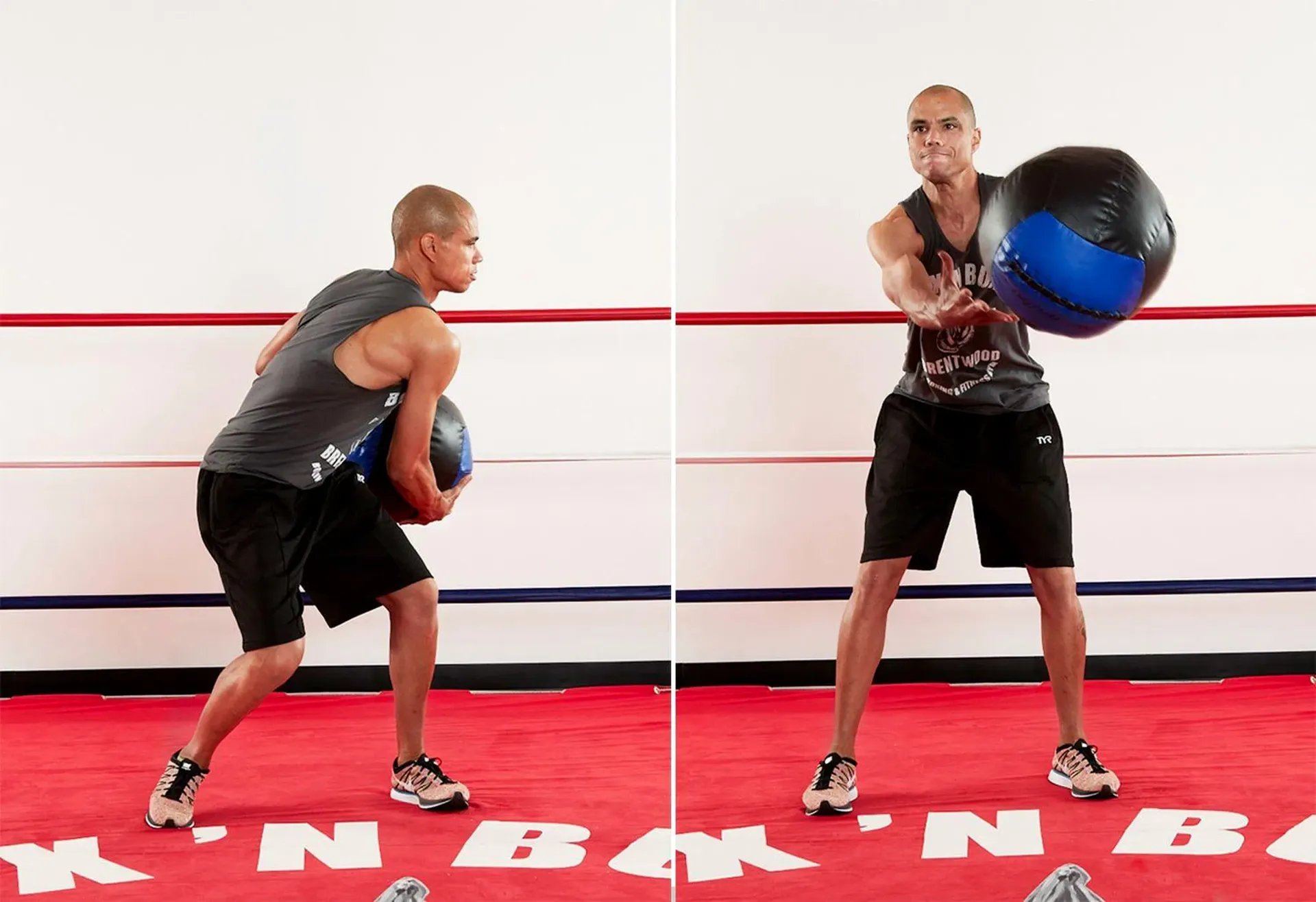
Stand sideways to a solid wall while holding a relatively light medicine ball. Load your rear hip, pivot through your foot, and explosively rotate your hips and torso while launching the ball into the wall.


The key is speed—not using the heaviest ball possible. Focus on firing the hips first and allowing the upper body to follow, similar to the movement pattern used when throwing a powerful hook.


This exercise teaches your body how to generate force quickly while improving coordination between the lower body, core, and upper body.


Perform: 3–4 sets × 5–8 explosive throws each side.

Person doing medicine ball exercises in a gym, shown in two action poses on a red floor.

2. Landmine Rotations

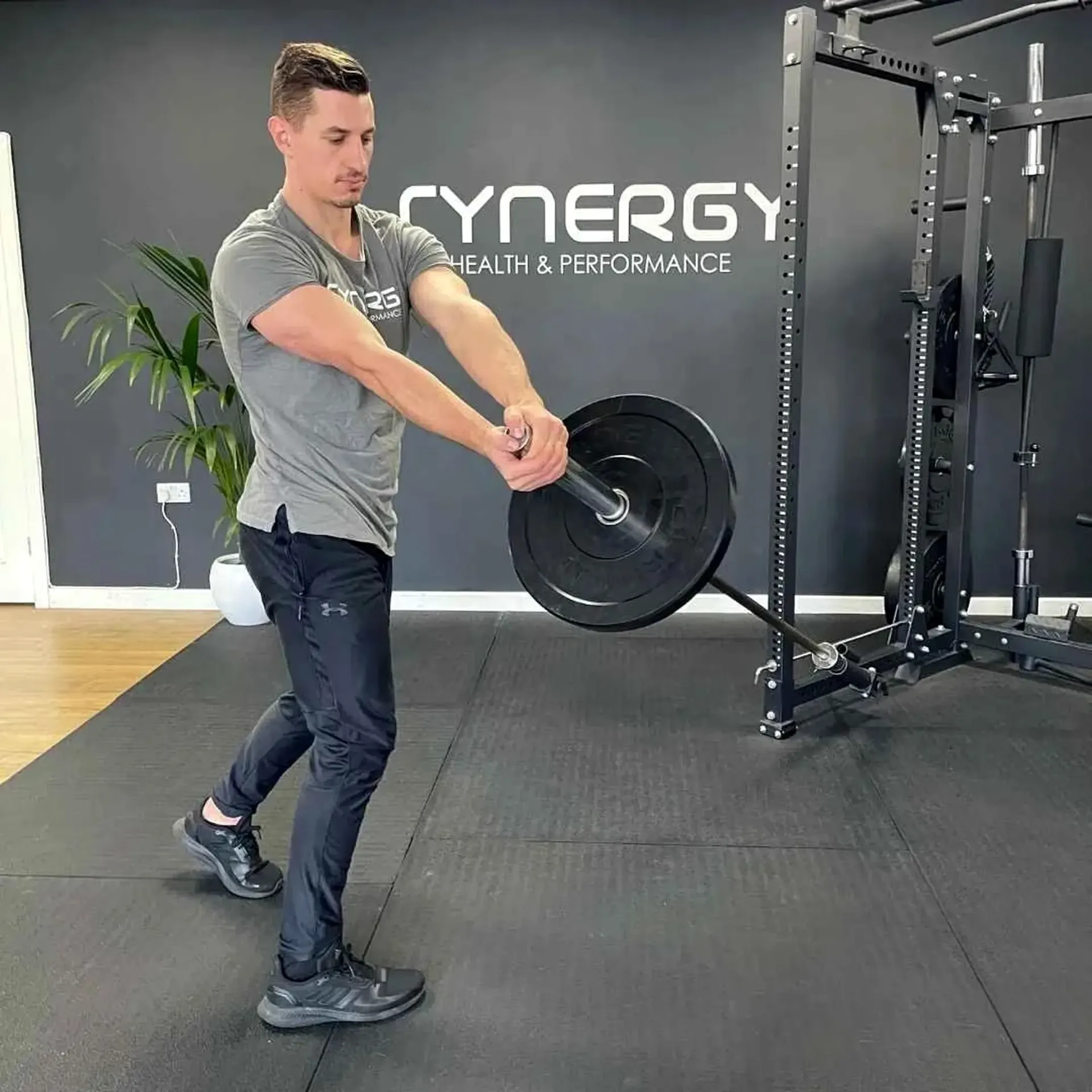
Athlete performing landmine rotations to build rotational strength for boxing power.

Landmine rotations are excellent for developing rotational strength through the hips, obliques, and entire trunk.


Hold the end of the bar with both hands and rotate it from one side of your body to the other. Allow your feet and hips to pivot naturally instead of forcing rotation through your lower back.


Unlike explosive medicine-ball exercises, landmine training provides more resistance, making it a great option for building controlled rotational strength.


Combining landmine rotations with faster movements like medicine-ball throws creates a balanced approach to developing boxing power.


Perform: 3 sets × 6–10 reps each direction.

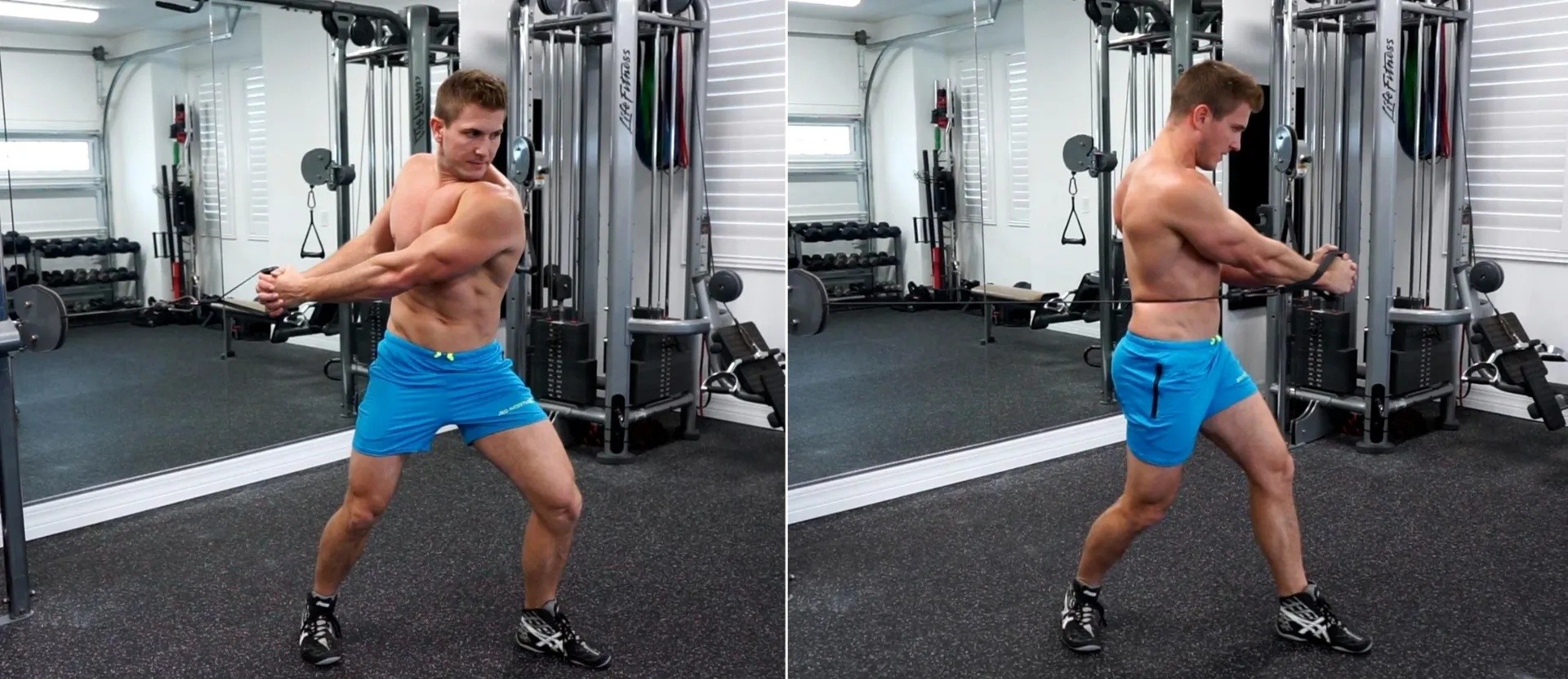
3. Cable Wood Chops

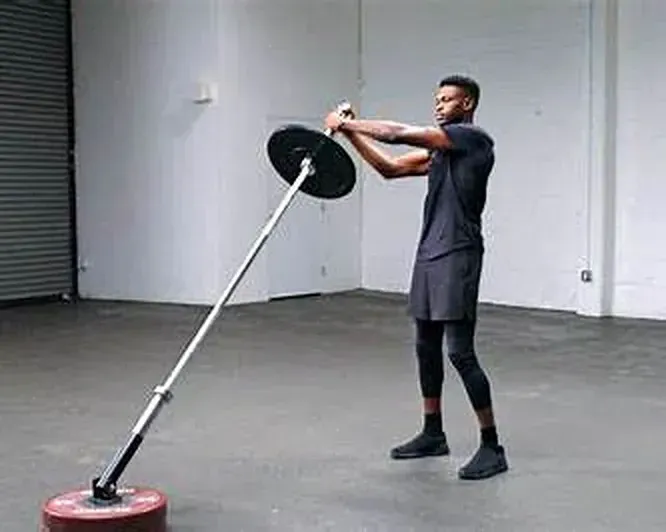
Boxer using cable wood chop exercises to improve rotational strength and core stability.

Cable wood chops give boxers something medicine-ball exercises cannot: continuous resistance throughout the entire rotation.


Set the cable at chest or shoulder height and rotate aggressively through the hips while keeping your core engaged. You can also perform high-to-low and low-to-high variations depending on your training goals.


Avoid turning this movement into an arm exercise. The hips should initiate the rotation, while the core and upper body follow through.


This exercise helps improve rotational control, stability, and the ability to transfer force efficiently during punching movements.


Perform: 3 sets × 8–12 reps each side.

Person swinging a cable machine handle in a gym studio, standing on a gray floor near equipment.

4. Medicine-Ball Hook Throws

This variation is even more boxing-specific.


Set up in your boxing stance and perform the throw using the same sequence required for a powerful hook:


Foot pivot → Hip rotation → Torso rotation → Arm extension


The goal is to replicate the explosive movement pattern of a punch while developing rotational speed and power.


A boxing-specific training study incorporated hook-punch medicine-ball throws into rotational training, highlighting the importance of explosive rotational movements for punch development.


Perform: 3 sets × 5–6 explosive throws each side.

5. Pallof Press (Anti-Rotation Exercise)

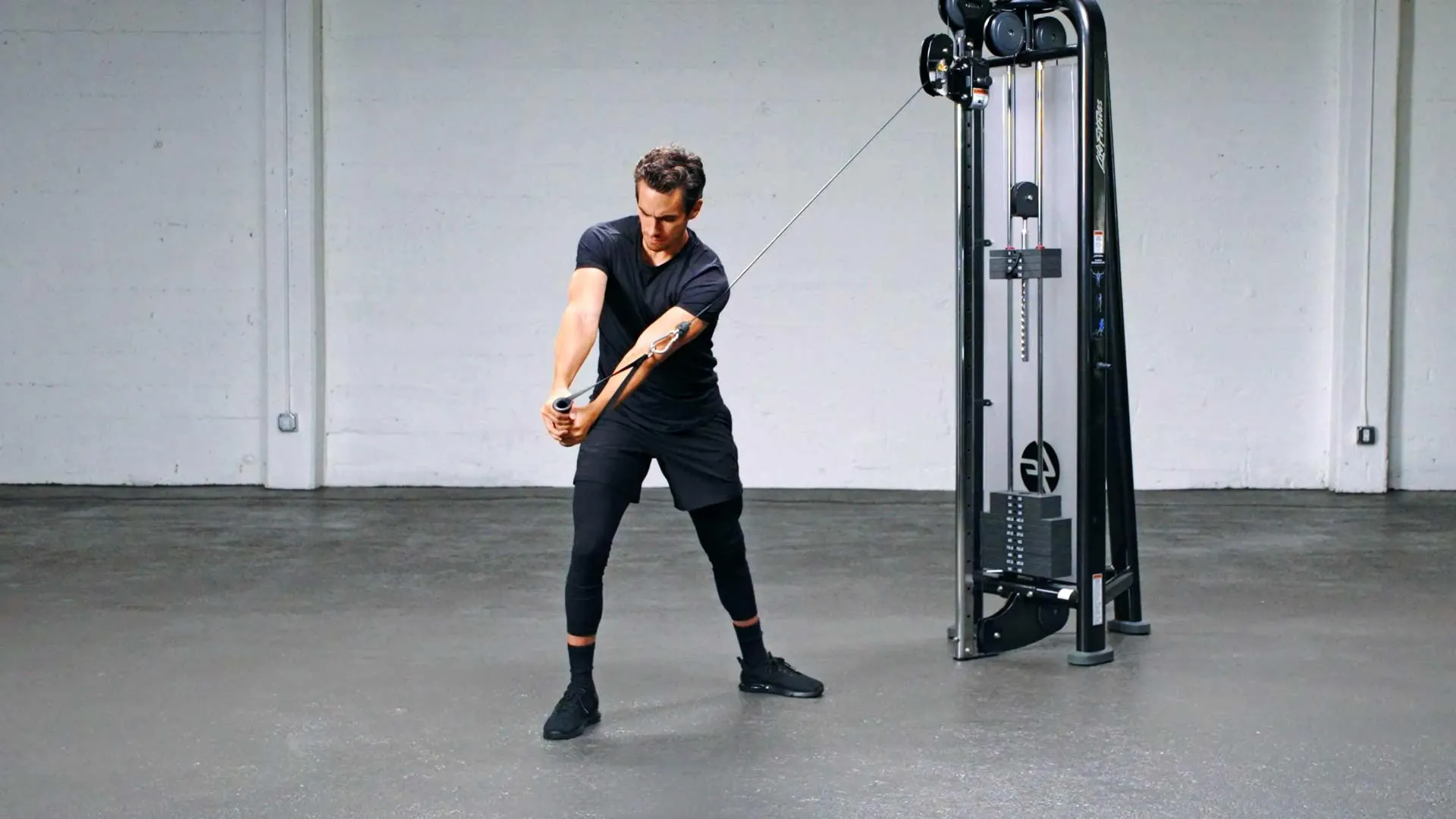
Man in blue shorts performing a cable woodchop exercise in a gym.

Not every rotational exercise should involve creating rotation.


Boxers also need the ability to stop and control rotation. This is where anti-rotation exercises like the Pallof press become valuable.


Attach a cable or resistance band at chest height and press it away from your body while resisting the force trying to rotate your torso.


This movement develops the stability needed to transfer power efficiently while maintaining balance, posture, and control during punches.


A stronger ability to resist unwanted movement helps boxers stay stable when attacking, defending, and changing direction.


Perform: 3 sets × 8–12 reps each side.

The Boxing Rotational Power Formula

The goal is not simply building stronger abdominal muscles. The goal is teaching your entire body to work together as one powerful system.


A powerful punch follows this kinetic chain:


Feet → Legs → Hips → Core → Shoulders → Fists

Each part of the body contributes to generating and transferring force.


For boxers, the ideal training approach combines:


  • Heavy controlled rotational strength exercises such as landmine rotations and cable movements
  • Fast explosive exercises such as medicine-ball throws and hook throws
  • Rotational mobility and stability work to improve movement efficiency


The most important rule is simple:


Never sacrifice speed for weight.


Boxing power is not about becoming a powerlifter. It is about developing the ability to produce force quickly and efficiently.


Train your rotation, improve your movement, and build the explosive power needed to punch harder, faster, and with more control.
Fighter performing medicine ball slam core training in a gym
August 20, 2026
Learn how fighter core training builds power, balance, endurance, and stability with functional exercises designed for better combat performance.
July 24, 2026
Ask any experienced fighter where real power comes from, and the answer is almost always the same: the core. Whether you're throwing knockout punches, defending a takedown, firing head kicks, or battling for position on the ground, your core is the engine that connects your upper and lower body.
July 15, 2026
Control the Fight with Better Jab Tempo